
History and Tradition of the Advent Calendar
The history and tradition of the Advent calendar are deeply rooted in Christian culture, evolving over the centuries to become a popular ritual during the run-up to Christmas.
Creation of the Advent calendar concept
The earliest forms of Advent calendar date back to the 19th century in Germany. Protestant families marked the days leading up to Christmas with chalk marks on doors or walls, lit a candle each day, or hung pious images.
The first printed Advent calendar appeared in the early 20th century, produced by a German publisher named Gerhard Lang. Inspired by a childhood memory in which his mother made him a cardboard calendar with a window to open each day, Lang created a calendar with small doors to open, revealing pictures or Bible verses.
Introducing chocolates and gifts: a commercial innovation
After the Second World War, Advent calendars began to include small sweets or gifts behind each door. This development contributed to their growing popularity with children and families.
The 1940s and 1950s were a period of rediscovering family and cultural traditions. Christmas celebrations played an important role in strengthening family bonds and returning to a certain normality. Advent calendars, which had been popular before the war, saw a resurgence. Publishers and manufacturers sought to revive pre-war traditions and introduce new features to attract families.
The introduction of chocolates into Advent calendars is often attributed to Richard Sellmer, a German publisher who played a key role in popularising Advent calendars after the war. In 1946, Sellmer relaunched the production of Advent calendars with pictures and sweets hidden behind the doors.
Calendars containing chocolates became extremely popular. The combination of the Advent tradition with the sweetness of chocolate made the Advent calendar a prized product in European households.
Adoption by major brands and diversification of contents
Over time, Advent calendars continued to evolve. In the 1960s and 1970s, manufacturers began to include small gifts, toys and other surprises in the calendars. This allowed for even greater product diversification and attracted a wider customer base.
Many major brands, particularly in toys and confectionery, saw the marketing potential of Advent calendars. They began producing themed Advent calendars featuring products from their ranges, such as LEGO calendars or calendars from famous chocolate brands.
The madeleine Advent calendar by Biscuiterie Jeannette
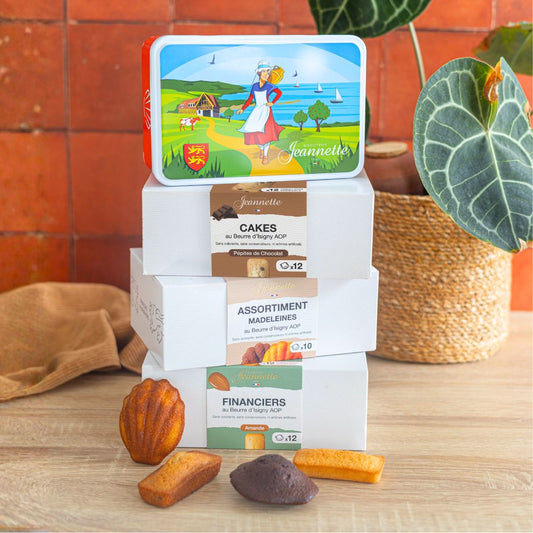
The Biscuiterie Jeannette Advent calendar, launched in 2018, marked an innovative step in the evolution of this tradition. Renowned for its century-old reputation for making delicious madeleines, Biscuiterie Jeannette introduced a unique concept by offering a calendar filled with delicious madeleines. This initiative not only captivated madeleine lovers but also reinvented the traditional Advent calendar concept by incorporating an iconic French pastry.
The Jeannette Advent calendar has become a celebration of artisanal quality and gastronomic know-how.

In 2022, Biscuiterie Jeannette decided to offer two Advent calendar designs for the first time. In addition to the classic Advent calendar, a model specifically designed for children was launched and proved a great success.