
DISCOVER THE HISTORY OF THE BISCUITERIE JEANNETTE
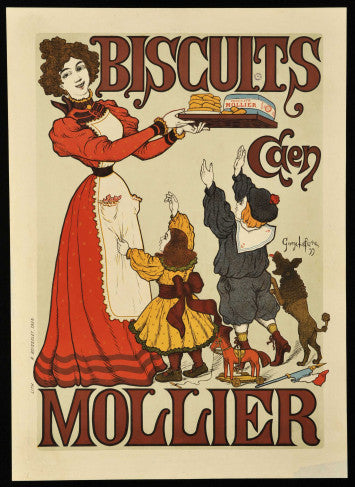
THE FOUNDING OF THE BISCUITERIE MOLLIER
FROM 1850 TO 1927
The long history of the Biscuiterie Jeannette begins with the founding of the Biscuiterie Mollier in 1850, in Caen, specialising in the making of petit fours and Norman shortbread.
Present at numerous culinary competitions, it notably won the silver medal at the 1900 Paris Universal Exhibition. Until 1914, the Mollier factory employed 10 workers specialised in production and 8 women for handling and packaging. The biscuits, renowned as “luxury biscuits", were sold at 205 rue Saint-Jean, near the factory.
During the 1914-1918 period, the biscuiterie slowed down due to the shortage of male labour mobilised at the war front. Women had to take over production.
THE ARRIVAL OF LUCIEN JEANNETTE
FROM 1927 TO 1939
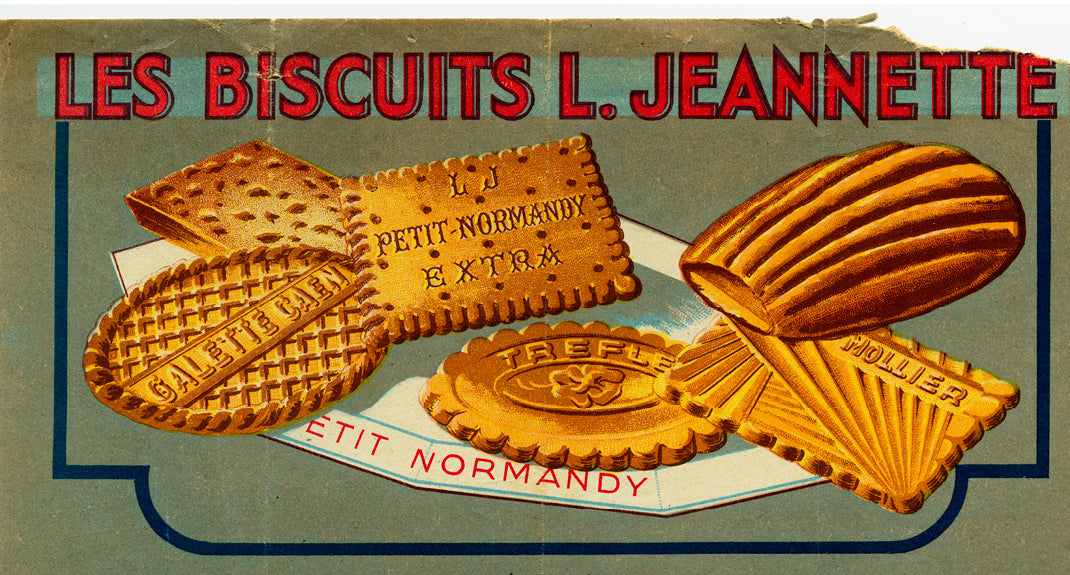
In 1927, Lucien Jeannette took over the Biscuiterie Mollier and renamed it Biscuiterie Moderne du Calvados. The biscuiterie's production diversified: dry cakes, almond croquettes, galettes de Caen, boudoirs and shortbread.
Young Lucien Jeannette benefited from the trust of the former Biscuiterie Mollier customers and sent travelling salesmen across France.
In 1930, Lucien Jeannette embarked on the production of madeleines, until then a speciality of Commercy. Introducing madeleine-making to Normandy was a genuine innovation.
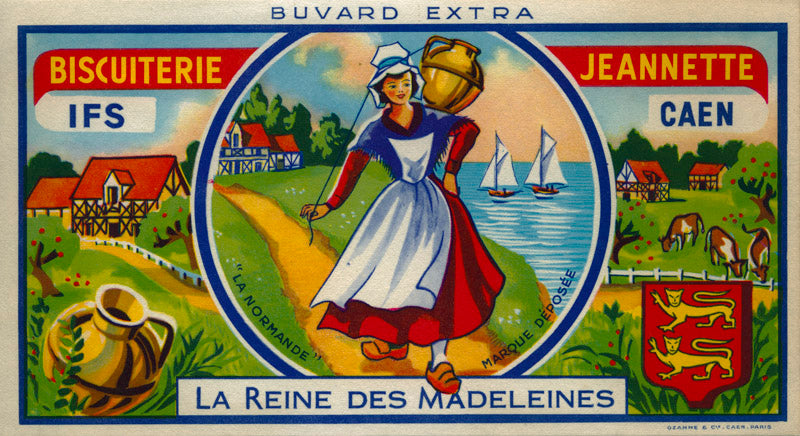
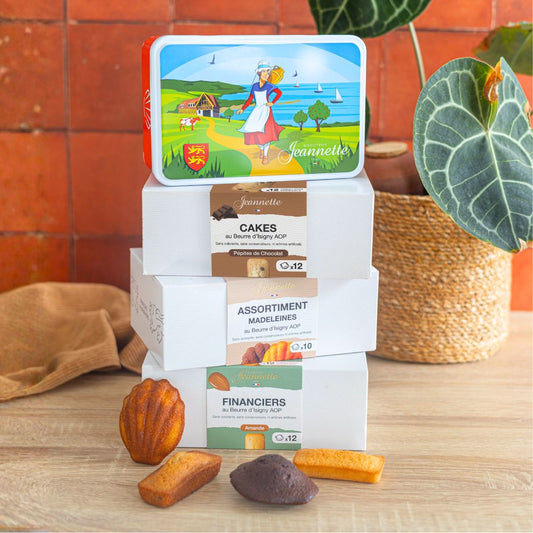
This is when the image of the Norman milkmaid, milk churn over her shoulder, walking a dirt path between the sea and the countryside first appeared. Countryside scenes evoking the Pays d'Auge complete the idyllic vision Lucien Jeannette wanted to give of Normandy.

THE SECOND WORLD WAR
FROM 1939 TO 1944
During the occupation, the Biscuiterie Jeannette went through a difficult period due to the shortages and imposed restrictions. Raw materials such as flour, butter and sugar were rationed.
Hit by bombing in June 1944, the Jeannette factory ceased all activity: 25% of the buildings were damaged and the Germans looted the stock of goods.
These setbacks did not stop Lucien Jeannette from volunteering with the Civil Defence to help the victims. The biscuiterie's van was used to weave through the bombing to rescue the injured and the dead. Lucien Jeannette helped clear 85 dead bodies and care for 1,455 wounded.
REBUILDING THE FACTORY
FROM 1944 TO 1951
After the war, Lucien Jeannette worked tirelessly to rebuild stock and restart production.
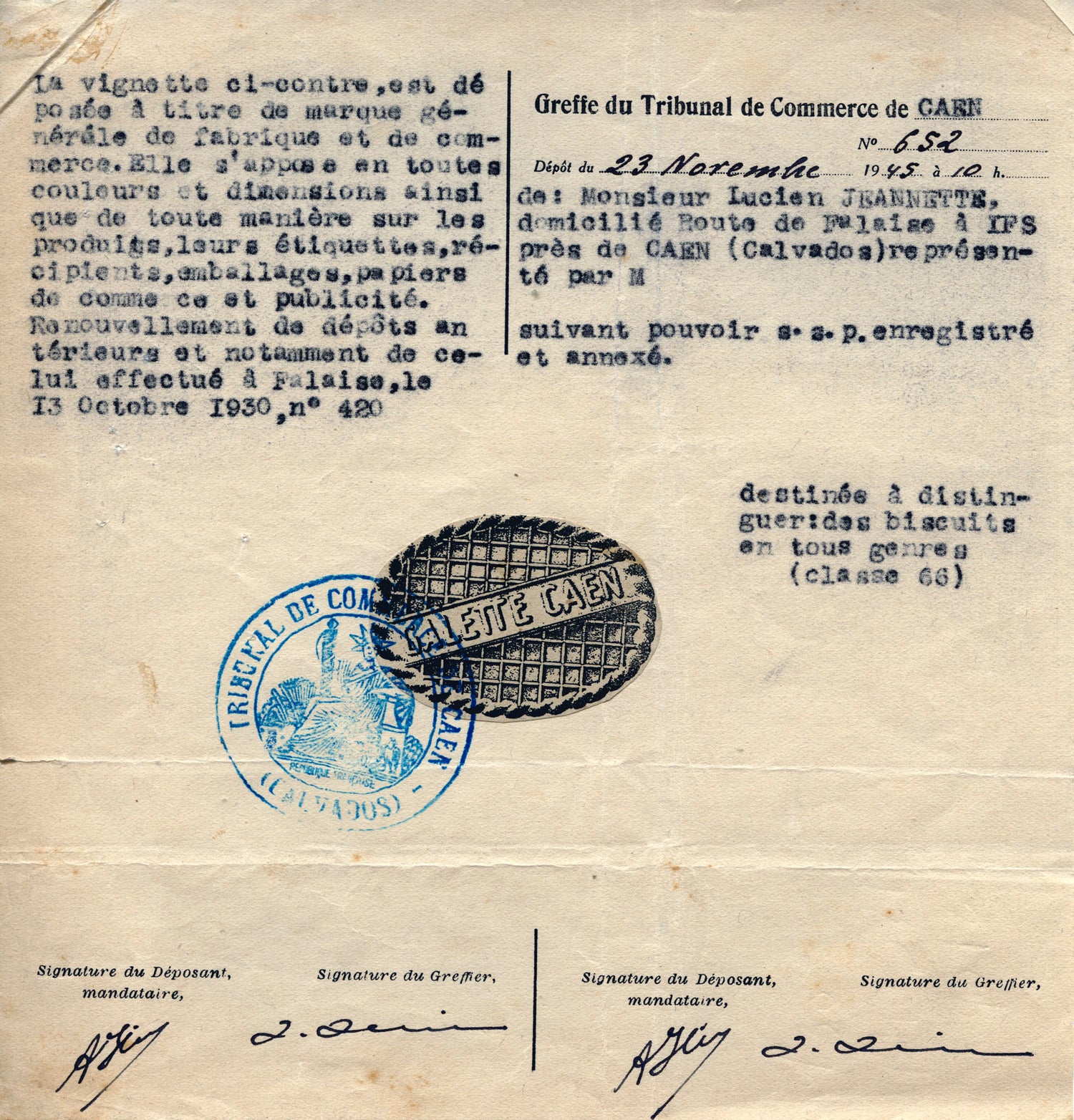
Trading resumed as early as January 1945, but it would take two years to replace the equipment. From 1947 to 1950, the machinery was gradually restored.
In 1950, the Biscuiterie Moderne du Calvados successfully launched the “Galette de Caen”, the “Petit Normandy” and the madeleines.
Lucien Jeannette, worn out by all these efforts, decided to step down. Having no heir, he chose to sell to the Vinchon brothers. On 21 October 1951, the Jeannette era came to a close.
THE JEANNETTE
THE ONLY CHILD OF LUCIEN JEANNETTE
Lucien Jeannette never had a child. The Norman milkmaid, carrying a copper milk churn, set against a countryside backdrop, is “Jeannette”, as employees and customers affectionately call her. She represents both the factory and its symbol.
An idyllic evocation of a traditional Normandy, little Jeannette has evolved over 50 years. Today her headdress has become rounder and only her bust is depicted, but the essence of her look is still recognisable. Today's employees hold dear to this symbol as much as to the Jeannette name, as it represents for them the identity of the Biscuiterie Jeannette.
LARGE-SCALE PRODUCTION
FROM 1951 TO 1975
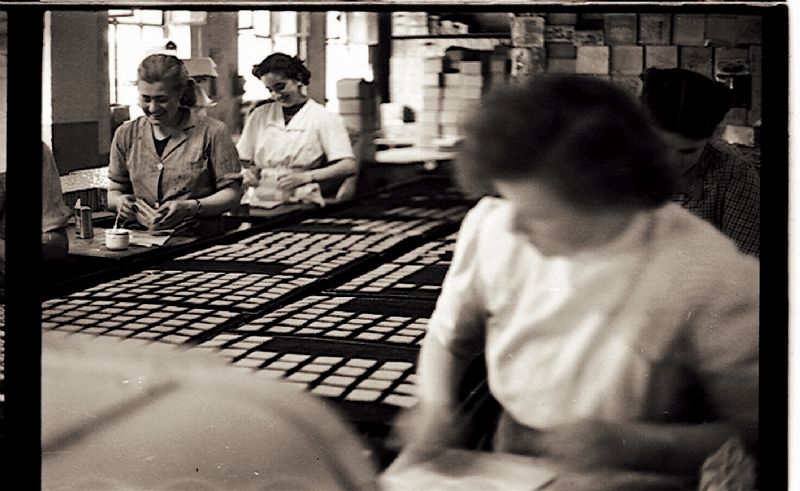
The Vinchon brothers launched the company into large-scale industrial production of madeleines. The yellow batter required a different type of manufacturing, packaging and storage than dry biscuits.
Logistics developed considerably and growth happened in successive leaps. From around fifteen people in 1950, the factory reached 240 employees in 1985. The Jeannette factory benefited from the opening of markets thanks to the spread of hypermarkets. Mechanising the production line increased productivity.
Transporting the goods played a very important role. With a fleet of 44 trucks, the Vinchon family guaranteed the distribution of fresh madeleines within the best possible timeframes across the whole country. What's more, this fleet also provided significant advertising exposure.
INVESTMENTS & MODERNISATION
FROM 1975 TO 1986
From 1975 onwards, it was a time of investment and modernisation of the site. At its peak, the Biscuiterie Jeannette had two factories, one on route de Falaise in Ifs and the other on rue de la Marne in Caen, which was also the head office address. The average workforce was 300 people. Both factories were each equipped with four production ovens, packaging machines and a shrink-wrapper. The one on route de Falaise was additionally equipped with a chocolate coating machine.
Thanks to marketing efforts, the biscuiterie established itself as the international leader in yellow batter. The company was present in 66% of hypermarkets, 60% of supermarkets, 46% of convenience stores and 20% of small shops with 27 product references.
THE 1980s: THE HEIGHT OF THE BISCUITERIE JEANNETTE
SUCCESSIVE BUYOUTS
FROM 1986 TO 1997
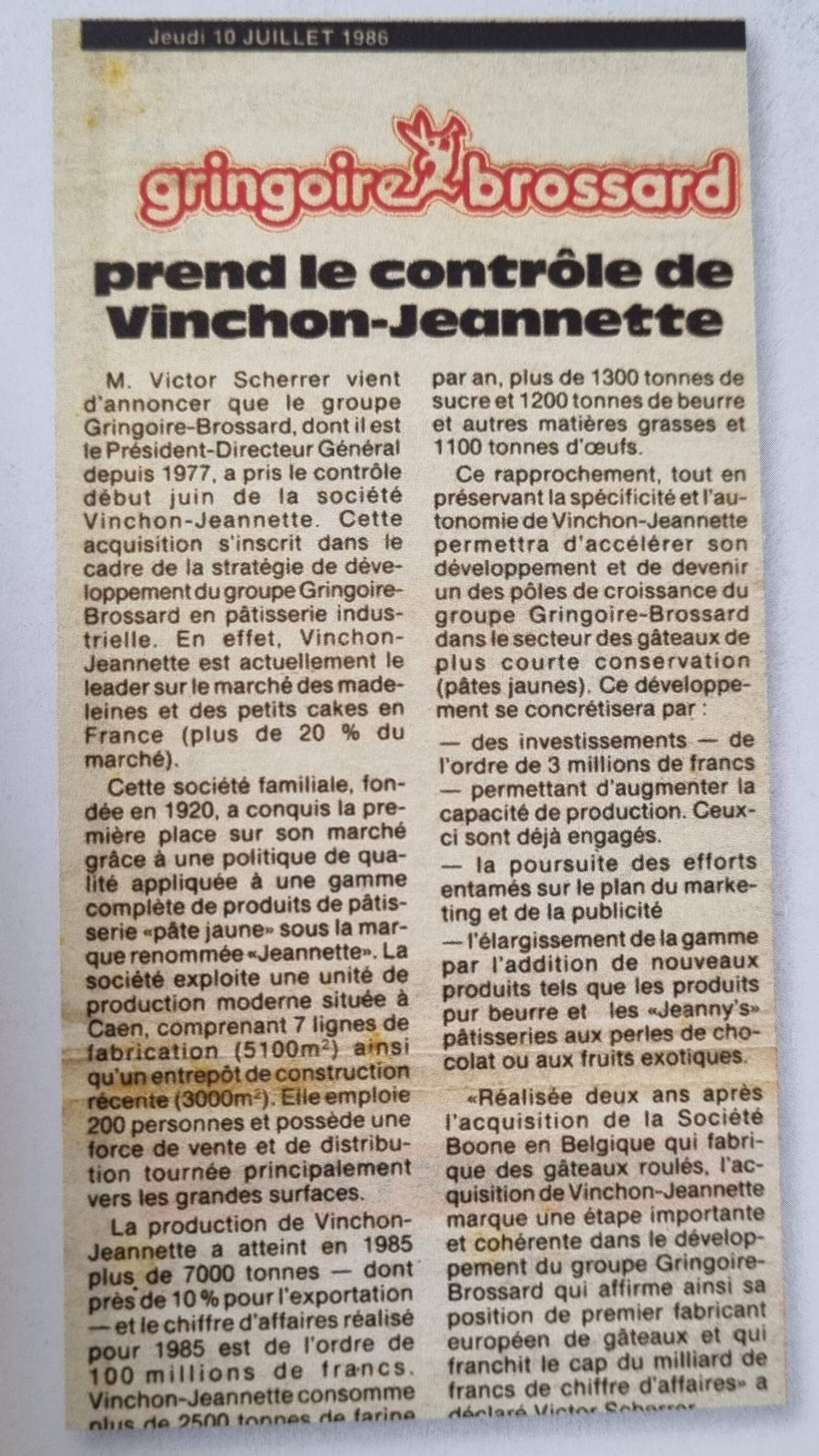
In 1986, the Vinchon brothers sold the business to the Brossard group. The following year, Victor Scherrer became the group's CEO, determined to become the leader in the industrial pastry market. The decision was made to develop the strongest brands and the most profitable sectors.
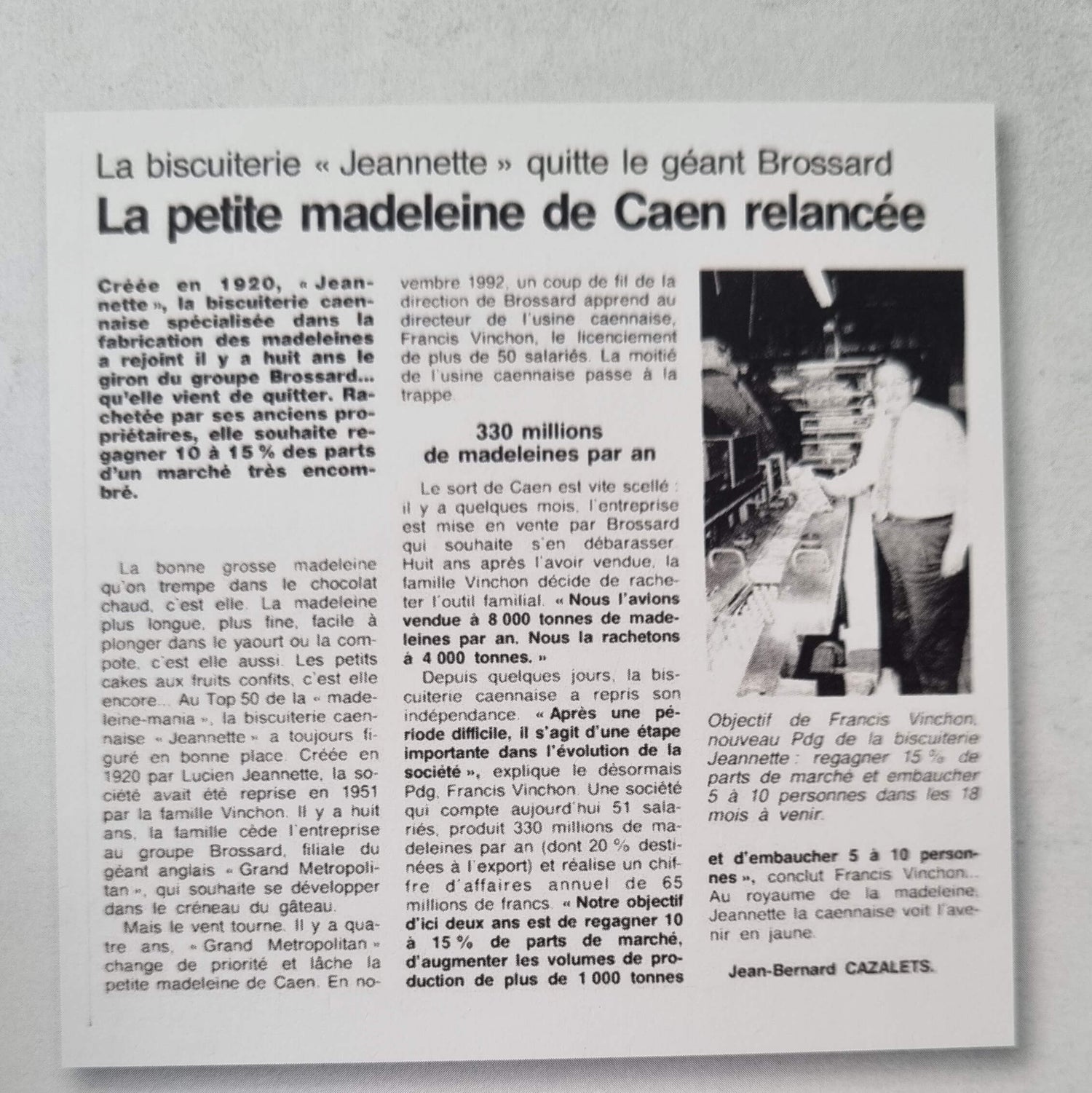
Restructuring was carried out, affecting the Jeannette factory with the redundancy in 1992 of 57% of the workforce. The Vinchon family decided to withdraw the Biscuiterie Jeannette from the group.
In 1994, the company returned to family ownership with Francis Vinchon as CEO. However, it was bought out a few months later by the Cartelot group, which ousted Francis Vinchon. Ultimately, the group's production was refocused in the North and the Biscuiterie Jeannette was liquidated in 1997.
A WEAKENED SITUATION
FROM 2001 TO 2013
In 2001, Jean-Claude Cherrier took over the Biscuiterie Jeannette. He made significant investments to get the machines running again and to reassure wary customers who demanded payment before delivery of the products.
By 2003, an average of 20 tonnes of madeleines were coming off the production lines every day. The financial situation was very precarious, and the company would remain extremely fragile until 2013.
THE EMPLOYEES' FIGHT
FROM 2013 TO 2021
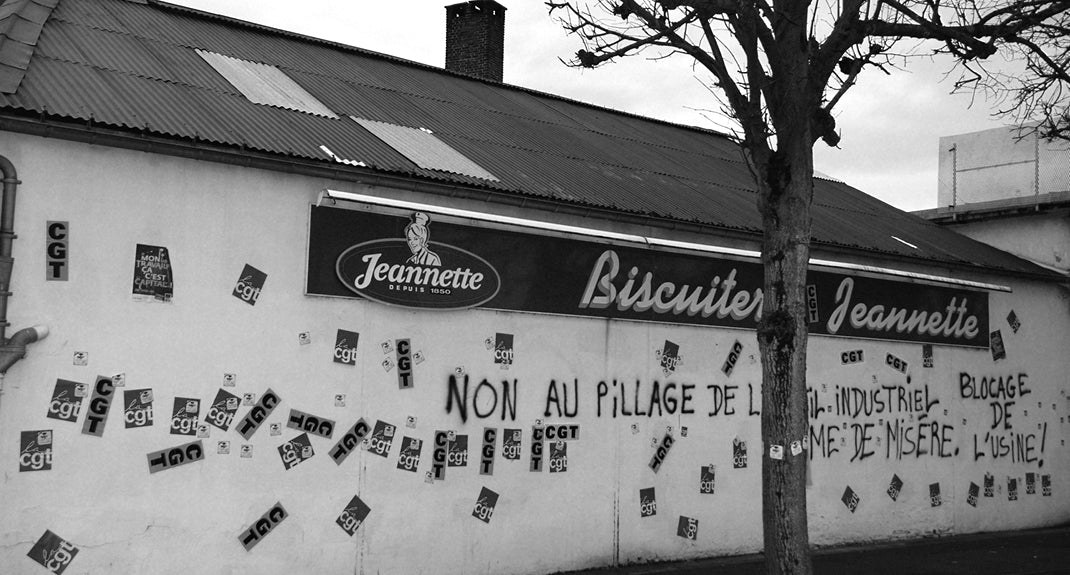
In 2013, the Biscuiterie Jeannette was liquidated and the employees were made redundant. They occupied the factory for 344 days to prevent the production equipment being auctioned off.
A large-scale crowdfunding campaign was launched. Thanks to the employees' fight and the media coverage of their struggle, the fundraising was a great success and the Biscuiterie Jeannette was saved.
In 2014, Georges Viana took over the Biscuiterie Jeannette. The new Jeannette madeleines were launched and even sold online. In 2017, the production site moved to Colombelles and the company was awarded the EPV label (Living Heritage Company).
In 2019, André Réol, an 87-year-old native of Caen, and Benoît Martinet took over the Biscuiterie Jeannette. The company's 25 employees remain deeply attached to the quality of the products that have earned the region its reputation.

THE REVIVAL
FROM 2021 TO 2026
In 2021, the Biscuiterie Jeannette regained financial stability after several years of recovery. This milestone marked a turning point for the company, which progressively consolidated its business by relying on the quality of its products and its brand image rooted in Normandy.
Between 2022 and 2024, growth was confirmed. Sales increased, thanks in particular to the success of online madeleine sales and the development of the factory shop. The company kept innovating with new recipes while staying true to its emblematic products.
In 2025, Benoît Martinet bought out the entire Biscuiterie Jeannette and became its chairman. This buyout marked a new chapter in the company's history, with a determination to accelerate its development while preserving its identity.
In 2026, the Biscuiterie Jeannette continues to develop and consolidate its growth. The company is strengthening its online presence and further developing its direct sales, all while continuing to innovate with new recipes.
Our current products:
-
 Sale
SaleGourmet Pack
Regular price 30,90€Regular price33,50€Sale price 30,90€Sale -
 Sale
SaleDiscovery Pack
Regular price 29,90€Regular price32,00€Sale price 29,90€Sale -
 Sale
SaleSummer Flavours Pack
Regular price 32,00€Regular price34,80€Sale price 32,00€Sale -
 Sale
SaleChocoAddict Pack
Regular price 28,50€Regular price30,90€Sale price 28,50€Sale


